

5 Ways to Layer Textures in a Living Room
Last Updated: October 29, 2026
Quick Summary
To layer textures in a living room, start with a neutral foundation of linen or wool upholstery and a natural-fiber rug, then mix two or three contrasting materials such as woven leather beside soft cotton or matte ceramic beside aged brass. Build fabrics in layers: a tight-weave linen base, a mohair and wool throw for warmth, and a slubby linen or woven leather pillow for interest.
- Keep walls matte and quiet so every textured accent has somewhere to land.
- Mix two or three dominant textures, then add subtle accents rather than repeating one finish.
- Reserve loftier weaves for accent pillows, since they take less abrasion than seat cushions.
- On a coffee table, fill roughly two-thirds of the surface and leave the rest open.
- Swap wool, wood, and candlelight in cool months for linen, stone, and glass in warm ones.
Table of Contents
- Start with a Neutral Foundation for Your Texture Layering
- Mix Materials for Visual Contrast and Depth
- Choose the Best Fabrics for Luxury Living Rooms
- How to Style a Curated Coffee Table with Textural Accents
- Frequently Asked Questions
Start with a Neutral Foundation for Your Texture Layering
Learning how to layer textures in living room design begins with restraint. The richest rooms are built on a quiet base, then dressed in layer textures that add depth, warmth, and dimension.
A neutral sofa, a natural rug, and a calm wall give every textured accent somewhere to land. A natural side table in a soft neutral finish anchors the seating area before the layers begin.
Start here:
- Choose a linen or wool upholstery in a soft neutral
- Ground the room with a natural-fiber rug
- Keep walls matte and quiet
- Let one natural side table anchor the seating area
The Coolist's 2026 interior design trends notes that warmth and texture now define elevated, comfortable spaces.
Mix Materials for Visual Contrast and Depth
Texture only reads when materials disagree with each other. Smooth plaster against slubby linen, raw timber against brass hardware, matte against a hint of gloss: that contrast is what creates visual contrast and depth.
A common mistake is repeating one finish everywhere. Mix two or three dominant textures, then add subtle accents; more tips a room toward chaos.
Try this pairing:
- Woven leather beside soft cotton
- Matte ceramic beside aged brass
- A woven leather accent pillow against a smooth linen seat
Choose the Best Fabrics for Luxury Living Rooms
The best fabrics for luxury living rooms balance touch, durability, and quiet beauty, and the balance shifts with where a piece sits and how the room is used.
Grace's approach is to build in layers: a crisp linen base, a plush throw for warmth, and one slubby, dimensional weave for interest. The Martina Throw in its mohair and wool blend brings that depth to a seating area. For a lighter layer, the Pezzo Throw Azure adds soft, textured cotton.

A practical hierarchy for a seating area:
- Upholstery (the base): tight-weave linen blends and wool blends suit daily seating, while loftier weaves work best as accents. Reserve the loftier weaves for accents.
- Throws (the warmth layer): mohair and wool for cool months; cotton and lightweight linen for warm ones. Rotating them is the simplest seasonal refresh a living room can have.
- Pillows (the interest layer): this is where you can afford the most delicate, dimensional weaves, a slubby linen or a woven leather accent, because they take less abrasion than a seat cushion.
There is also a sensory reason to prioritize touch. Texture is the one design element you experience with your hands and body, not just your eyes, which is why a well-layered room feels calmer and more grounded than a visually busy one.
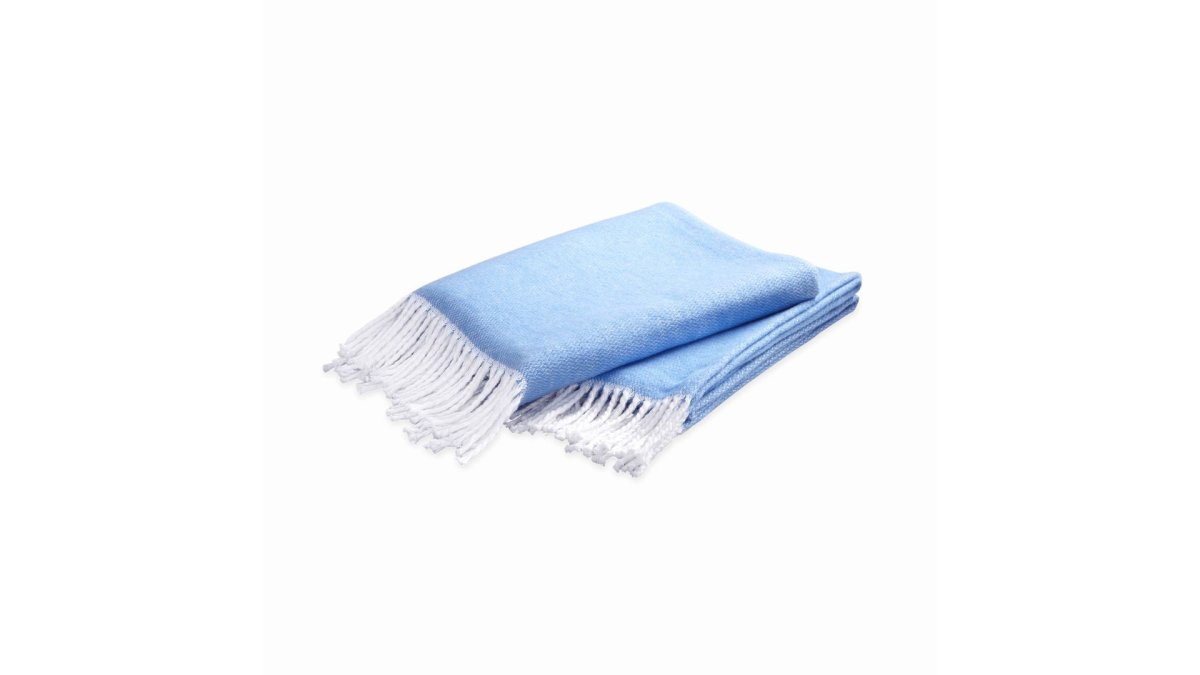
For a deeper look at material choices, see our guide to our luxury home decor brands.

A simple hierarchy keeps a seating area layered without feeling busy.
| Layer | Role | Best fabrics |
|---|---|---|
| Upholstery | The base | Tight-weave linen blends and wool blends for daily seating |
| Throws | The warmth layer | Mohair and wool for cool months; cotton and lightweight linen for warm ones |
| Pillows | The interest layer | Slubby linen or woven leather accents that take less abrasion |
How to Style a Curated Coffee Table with Textural Accents
A curated coffee table is a small study in materiality and the most overlooked place in a living room to layer texture. The goal is a collected, layered look, not a display, and the difference is restraint plus contrast.
Follow these steps:
- Start with one grounding piece, like a stack of books
- Add a natural element: a bowl, a stone, a branch
- Layer in one metallic or glass accent for light
- Leave breathing room between objects
- Swap pieces seasonally to shift the mood
Scale is where most tables go wrong. On a large table, one oversized object reads as intentional; a cluster of small ones reads as clutter. On a small table, a single tall element plus one low, wide piece is usually enough. Fill roughly two-thirds of the surface, and leave the rest open.
Texture on a coffee table works the same way it does on a sofa: a smooth surface needs a rough one, a glossy object needs a matte companion. A polished stone bowl beside a raw linen-bound book, or a glass votive beside a woven tray, gives the eye somewhere to travel. Voyage et Cie candles bring a warm, tactile presence, while Avenida Home trays and Tessitura Toscana linens add pattern and weave to the composition.
Seasonal swapping keeps a table feeling new. In cool months, lean into wool, wood, and candlelight; in warm months, swap in linen, stone, and glass.
Our coffee table books and home accessories offer pieces to build that layered composition.
Frequently Asked Questions
How do you mix textures in a living room without it looking cluttered?
The key is to limit your palette. Start with a neutral foundation, like a linen sofa or a soft rug, and then introduce two or three dominant textures, such as a slubby linen pillow, a plush throw, and a raw wood table. Keep the colors within a related family to maintain a unified, elegant look rather than a chaotic one. This approach ensures each texture stands out without overwhelming the space.
What are the best fabrics for luxury living rooms?
For a luxurious feel, focus on natural fibers with a tactile quality. Slubby linen, like the refined linens of our Matouk and Sferra collections, offers a refined texture. Plush mohair or wool, as seen in the Martina Throw, adds warmth and depth. For a touch of softness, brushed cotton like the Celine Throw provides a cozy, inviting layer.
Why is texture important in interior design?
Texture is what makes a room feel collected and alive. It adds dimension and depth that flat colors alone cannot achieve, turning a simple space into a sensory experience. By layering tactile surfaces like a shaggy rug, a smooth brass table, and a soft throw, you create visual contrast and a sense of warmth. This balance of materials is the foundation of a room that feels both elegant and effortlessly comfortable.
Layering texture is where a room stops feeling staged and starts feeling lived in. If you would like help translating these ideas into your own space, Sotre Collection offers curated luxury brands, interior design services, and registry support to bring it together. Get started with Sotre Collection and build a living room that feels collected, warm, and entirely your own.
